Showing posts with label Case Study. Show all posts

Wednesday, January 22, 2014

Case Study of the Month

Fido, a 10 lb, 1 year old Jack Russell Terrier was presented to us after ingestion of some Nicotine gum.  With the ingestion of this type of gum in dogs we worry about TWO different toxicities, nicotine and a sugar called Xylitol.  A physical examination was performed and all was within normal limits.  
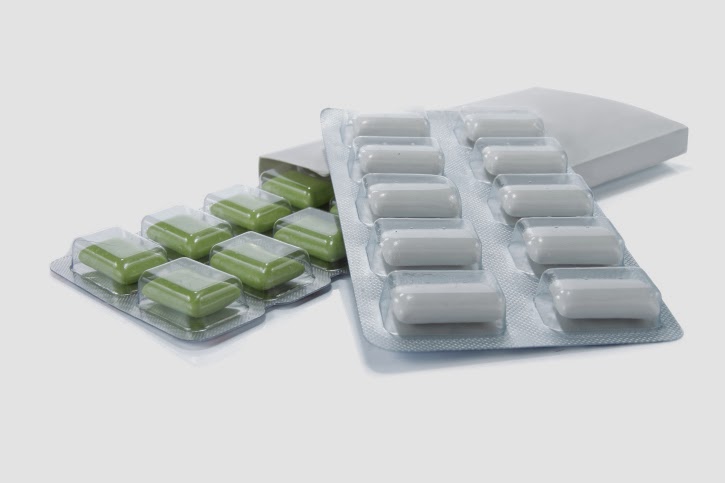

Fido's blood work was all within normal limits as well.  The idea behind bringing pets into the clinic after toxin ingestion is to decontaminate or help them vomit ASAP to prevent absorption into the blood stream, along with controlling any symptoms as a result of ingestion.  Pets are hospitalized in order to monitor them for the development of symptoms as a result of toxin ingestion.  Outlined below were the steps taken in Fido's case:

Step 1:  Since ingestion occurred less than 1 hour prior to Fido’s arrival and the patient was stable, we attempted to make him vomit to rid the stomach of its contents and prevent absorption into his blood stream.  We gave Fido several doses of hydrogen peroxide.  With no such luck we tried another emetic agent called apomorphine, which can only be obtained at a veterinary clinic.  Unfortunately, we were unable to induce vomiting. 

Step 2:  Since there is no antidote for either Nicotine or Xylitol toxicity, the next step is to give the patient activated charcoal.  This is performed if ingestion of the toxic substance occurred over an hour after presentation or after the patient stops vomiting.  Activated charcoal binds to the toxin and prevents absorption from the gut.  It is recommended that multiple doses be given. 

Step 3:  Fido was then put on intravenous fluids to flush/filter out the toxin (diuresis) more quickly. 
Step 4: Hospitalization and observation for any clinical signs associated with either toxin exposure as listed below was the final step for Fido.

·         Nicotine initially causes excitement, excess salivation, vomiting, diarrhea, and/or muscle tremors.  Symptoms can rapidly progress to muscle weakness, depression, shallow respiration and paralysis.  The ingestion of this toxin can lead to death because the respiratory muscles can't do their job.  The lethal dose is very little = 2-3mg/kg.  In Fido's case 3 pieces of gum could have been lethal! 

·         Xylitol causes a drop in blood sugar less than 60 minutes after ingestion causing depression, lethargy/weakness, muscle tremors, coma and possibly seizure.  This toxin causes liver damage within 8-12 hours after ingestion leading to vomiting, diarrhea, seizures and possibly death. 


Outcome:  Fido was very fortunate and he never showed any adverse symptoms as a result of the toxin ingestion due to our fast action in decontamination.  His blood sugar remained normal and we kept him on fluids in the hospital for 24 hours.  He was released to his owners the next day.  We followed up a week later to check blood work to make sure his liver wasn't affected by the Xylitol.  His lab work remained normal!  Fido is continuing to live a happy and healthy life with his loving family!

Friday, October 18, 2013

Case of the Month: Clark


Clark is a 3-year-old male neutered domestic shorthair cat who presented to the Pekin Veterinary Clinic because he was straining to urinate and the owner was seeing blood in his urine (hematuria). He was also acting like he was in pain and was not eating or drinking at home. On physical examination, Clark's heart rate was greatly increased (tachycardia) and he had a large hard bladder on abdominal palpation. When Clark's abdomen was manipulated, he was extremely painful.
At this time, Clark was taken to our ultrasonography room to assess his bladder on the ultrasound and collect a urine sample by cystocentesis. The ultrasound showed that the bladder was very large, distended and contained a lot of foreign material. The urine sample that was collected revealed that the urine was very bloody and contained an abundance of what appeared to be crystalline material. The urine sample was sent into the laboratory for urinalysis. The urinalysis revealed that the bladder contained crystals (struvite) and blood from the inflammation of the inside of the bladder wall from the crystals.
Clark was in very critical condition, so it was decided between Clark's mom and the veterinarian that he needed to be treated as soon as possible for this condition. We started by collecting Clark's blood and assessing his kidney function and electrolytes. His blood work showed that both of his kidney values were highly elevated. His blood urea nitrogen (BUN) was 119 (normal range 10-30) and his creatinine was 9.8 (normal range 0.3-2.1). The electroyte that was dangerously high was potassium (this is a common bloodwork finding in cats who cannot urinate due to having stones lodged in their urethra).
Clark was immediately anesthetized to relieve his pain and so that we could unblock him by passing a sterile urinary catheter. We needed to unblock Clark as soon as possible to decrease his chance of complications from his condition. These potential complications included: bladder rupture from overextension of the bladder wall, irreversible kidney damage and/or adverse effects on the heart from the high potassium. Once anesthetized, we unblocked Clark's urethra which was blocked with multiple small crystals. After the urinary catheter was placed, we flushed that bladder with a mixture of sterile saline and lubricant to try to remove as many of the crystals from the bladder and urethra as possible.
A sterile urine collection system was placed on the end of Clark's urinary catheter so that his urine output and quality could be assessed. An intravenous catheter was placed in Clark's cephalic vein so that he could receive fluids to correct his electrolyte disorders and flush the kidneys to bring down the elevated kidney values. Clark was given oral pain medications to help keep him comfortable. He was also given an antibiotic to decrease his chances of getting a urinary tract infection as a result of the urinary catheter being placed. Clark rested for the remainder of the afternoon and evening without complication.